
We are on the brink of a new shift in the web and Joomla has the opportunity to be an early adopter in this shift. Taking part will help place Joomla ahead of other open source CMS's in terms of functionality, increase website conversions, and result in an overall better user experience. So what is this shift I'm talking about? It's the dynamic personalization of a website for the individual visitor. In this JCM whiteboard I will be exploring this concept and challenging Joomla developers to embrace and develop this concept.
Saturday, January 5, 2013
Joomla

Google News: Google may need history lesson on blocking rivals' products

- With its decision to block Windows Phone users from accessing Google Maps, Google isn't the first browser maker to block users from accessing content with a competitive product. |
Browse all of today's headlines on Google News
Friday, September 16, 2011
Connected Cars Coming to a Showroom Near You
Are you worried about getting into an accident with a distracted driver talking on a cell phone? Well coming soon you may have to be concerned about motorists who are browsing the web, searching for closestor even check the latest stock quotes. The next big market for auto industry is the connected car. Automakers are now featuring internet enabled models at recent car shows and researchers predict that 90% of new cars will ship with connected car features within the next five years.
The times are long past when car shows reeked of motor oil and car enthusiasts were obsessed with engine power and sleek designs. With the aid of telematics and M2M (machine to machine) wireless internet access, automobile makers believe the car of the future will no longer be just a vehicle, but an extension of the home or workplace, where drivers will have access to emails and keep up-to-date on their social networks even on the road.
 German manufacturer BMW already offers ConnectedDrive and BMW Assist which provides an onboard computer with internet access where drivers can locate the closest restaurant, the nearest ATM or free parking space in a matter of clicks. And rival Mercedes Benz is not to be outdone, either: its new Mbrace built-in computer allows drivers to unlock doors using their mobile phones, avoid jams using local traffic data, find your car in a crowded parking lot and even surf the web.
 Even budget automakers like Hyundai are offering connected car features. Hyundai offers the Blue Link system in the popular Sonata allows voice recognition software to dictate text messages. Toyota has its version called Entune, which will reach the dealerships this fall links with smartphones and offers on-screen information and weather. Ford's Sync system lets you listen to text messages and send automated replies. In its new concept car, the Evos, Ford claims it can adjust the car to custom personal preferences, even down to the cabin temperature, and access to the driver's home entertainment systems for listening to favorite news and music stations.
"A successful car must offer lifestyle, comfort and also fit in with people's ecological awareness," says Stephan Reith of the consultancy firm, Booz & Company.
The automotive part makers such as Bosch in Germany and Valeo in France are busily investing in state-of-the-art onboard computer technologies that can park a vehicle without the driver in the car.
Nevertheless, the new services are not without their dangers, such as driver distraction. The challenge is to meet customer demands without impinging on traffic safety. "Automakers really need to think about all of these things that they're putting in automobiles now and what impact they have on the driver's ability to drive safely" says Transportation Secretary Ray LaHood. The National Highway Traffic Safety Administration is evaluating in-car technology to develop criteria and regulations that auto manufacturers can use to minimize distractions.
And there are other security concerns, US anti-virus software developer McAfee warned of possible hacker attacks on vehicle computer systems. "It's one thing to hack into someone's email account or laptop. But if cars are hacked, that could seriously compromise critical safety systems," says McAfee general manager Stuart McClure.
And data protection specialists warned drivers must be careful about the sheer volume of personal data stored, particularly in electric cars, which could be used to track somebody's whereabouts or movements.
The concept of the connected car definately has its appeal. Convenient, smartphone-like services can give you quick access to information that can help you save time and even save gas by preventing needless driving.
The bottom line is drivers need to use electronics sensibly. If you need to search the web, send text messages or set destinations when the car is parked or let a passenger work the controls. A driver should ensure that his attention focused on the road and safety is the number one concern.
The times are long past when car shows reeked of motor oil and car enthusiasts were obsessed with engine power and sleek designs. With the aid of telematics and M2M (machine to machine) wireless internet access, automobile makers believe the car of the future will no longer be just a vehicle, but an extension of the home or workplace, where drivers will have access to emails and keep up-to-date on their social networks even on the road.


"A successful car must offer lifestyle, comfort and also fit in with people's ecological awareness," says Stephan Reith of the consultancy firm, Booz & Company.
The automotive part makers such as Bosch in Germany and Valeo in France are busily investing in state-of-the-art onboard computer technologies that can park a vehicle without the driver in the car.
Nevertheless, the new services are not without their dangers, such as driver distraction. The challenge is to meet customer demands without impinging on traffic safety. "Automakers really need to think about all of these things that they're putting in automobiles now and what impact they have on the driver's ability to drive safely" says Transportation Secretary Ray LaHood. The National Highway Traffic Safety Administration is evaluating in-car technology to develop criteria and regulations that auto manufacturers can use to minimize distractions.
And there are other security concerns, US anti-virus software developer McAfee warned of possible hacker attacks on vehicle computer systems. "It's one thing to hack into someone's email account or laptop. But if cars are hacked, that could seriously compromise critical safety systems," says McAfee general manager Stuart McClure.
And data protection specialists warned drivers must be careful about the sheer volume of personal data stored, particularly in electric cars, which could be used to track somebody's whereabouts or movements.
The concept of the connected car definately has its appeal. Convenient, smartphone-like services can give you quick access to information that can help you save time and even save gas by preventing needless driving.
The bottom line is drivers need to use electronics sensibly. If you need to search the web, send text messages or set destinations when the car is parked or let a passenger work the controls. A driver should ensure that his attention focused on the road and safety is the number one concern.
Thursday, August 25, 2011
Can new CEO keep Apple on top?
When Steve Jobs' returned to Apple Inc. in 1997, the company has raced to the top of the music industry, turned the mobility space upside down with the immense popularity of the iPad and iPhone.Now, that Jobs is no longer leading Apple the new CEO will have to prove it can keep its momentum.
Apple said that Jobs, 56, resigned from the CEO post, in a move that seems motivated by his ongoing, yet still unspecified health issues. Jobs had taken an indefinite medical leave of absence in January, marking his third such leave in seven years. Jobs, who co-founded Apple in 1976, previously survived pancreatic cancer and received a liver transplant.
In his resignation letter, Jobs said "I have always said if there ever came a day when I could no longer meet my duties and expectations as Apple’s CEO, I would be the first to let you know. Unfortunately, that day has come. I hereby resign as CEO of Apple. I would like to serve, if the Board sees fit, as Chairman of the Board, director and Apple employee. As far as my successor goes, I strongly recommend that we execute our succession plan and name Tim Cook as CEO of Apple. I believe Apple’s brightest and most innovative days are ahead of it. And I look forward to watching and contributing to its success in a new role. I have made some of the best friends of my life at Apple, and I thank you all for the many years of being able to work alongside you."
Taking on the role of board chairman, Jobs now passes the CEO role Tim Cook, 50, the company's chief operating officer. Cook had been acting CEO since January. For years, he has been running Apple's day-to-day operations, and has long been seen as the natural successor. He also served as Apple's leader for two months in 2004 while Jobs battled cancer, and again for five months in 2009 when Jobs received a liver transplant. The company has thrived under Cook's leadership, briefly becoming the most valuable company in America earlier this month. Some even compared Apple's worth against the US treasury.
Cook is not nearly as recognizable as Jobs and will have to create his own persona. Jobs became the very public face of Apple, dressed in his signature blue jeans, black turtleneck and wire rimmed glasses constantly presenting the company's new iPhones, iPads, iPods at immensely popular and anticipated media events. Though Jobs has looked increasingly frail, he emerged from his leave twice this year to tout products at such events: Jobs unveiled the second version of Apple's iPad tablet computer in March. Then, in June, he resurfaced to show off Apple's iCloud music synching service.
But while Jobs is the most recognized person at Apple, he is not the only one responsible for the company's success. Many industry watchers believe that despite his importance, Apple will continue to innovate and not just survive, but thrive.
Well respected research analyst Shannon Cross says "Steve Jobs put in place at Apple a culture of innovation." And its innovation has translated to sales. With Cook running the company, Apple sold 9.25 million iPads during the most recent quarter, which ended in June, bringing sales to nearly 29 million iPads since they first began selling in April 2010. Apple also sold 20.3 million iPhones in the same period, which was millions more than analysts expected. The company's stock has risen 8 percent since Jobs announced his most recent medical leave.
Cook's track record at Apple is strong. The first time he was in charge back in 2004, things went so well that Apple promoted him from executive vice president to chief operating officer in 2005.
During the second time, which lasted from mid-January to the end of June 2009, Apple released a new version of the iPhone and updated laptop computers on schedule. The company also announced that its iTunes app store hit a major milestone: More than one billion apps were downloaded within the first nine months of its existence.
Apple's stock rose 62 percent during that time, satisfying investors' concerns over Jobs' absence.
Cook, an Alabaman with short, gray hair and a broad, thin-lipped smile, has been an asset to Apple since his arrival in 1998. He is credited with tuning Apple's manufacturing process to solve chronic product delays and supply problems. His inventory management skills helped Apple build up its $72.6 billion hoard of cash and marketable securities -- funds that it can use to keep its lead in the portable electronics market.
Like IBM, McDonald's or Ford, all of which lost visionary CEOs, Apple is not necessarily dependent on the immortality of the genius behind it, says Terry Connelly, dean of the Ageno School of Business at Golden Gate University in San Francisco. "A company is dependent on its ability to institutionalize that genius in the corporate DNA," he says. "Apple shows every sign of having done that. We will see that when we see how Cook responds to competitive pressure."
And, as Cross points out, Cook won't be leading Apple alone. His supporting team includes Jonathan Ive, who oversees the elegant, minimalist design of Apple's products; Ron Johnson, who runs Apple's stores; Philip Schiller, the marketing chief; and Scott Forstall, who supervises the iPhone software.
"The bench at Apple is extremely strong," Cross says. "He has a good group of executives behind him."
And consumers -- the group Apple really depends on to make its products popular -- may not be that affected by the change. Apple customers don't buy the company's products because of Steve Jobs, Gartner Research analyst Michael Gartenberg says, "people buy Apple products because they're Apple products". Without Jobs, Michael believes the company's challenge will be the same as it was with him: continuing to find ways to raise the bar with its consumer electronics.
So the question is what will happen when Cook takes over the Apple kitchen?
Apple said that Jobs, 56, resigned from the CEO post, in a move that seems motivated by his ongoing, yet still unspecified health issues. Jobs had taken an indefinite medical leave of absence in January, marking his third such leave in seven years. Jobs, who co-founded Apple in 1976, previously survived pancreatic cancer and received a liver transplant.
 |
| Image from AppleInsider.com |
Taking on the role of board chairman, Jobs now passes the CEO role Tim Cook, 50, the company's chief operating officer. Cook had been acting CEO since January. For years, he has been running Apple's day-to-day operations, and has long been seen as the natural successor. He also served as Apple's leader for two months in 2004 while Jobs battled cancer, and again for five months in 2009 when Jobs received a liver transplant. The company has thrived under Cook's leadership, briefly becoming the most valuable company in America earlier this month. Some even compared Apple's worth against the US treasury.
Cook is not nearly as recognizable as Jobs and will have to create his own persona. Jobs became the very public face of Apple, dressed in his signature blue jeans, black turtleneck and wire rimmed glasses constantly presenting the company's new iPhones, iPads, iPods at immensely popular and anticipated media events. Though Jobs has looked increasingly frail, he emerged from his leave twice this year to tout products at such events: Jobs unveiled the second version of Apple's iPad tablet computer in March. Then, in June, he resurfaced to show off Apple's iCloud music synching service.
But while Jobs is the most recognized person at Apple, he is not the only one responsible for the company's success. Many industry watchers believe that despite his importance, Apple will continue to innovate and not just survive, but thrive.
Well respected research analyst Shannon Cross says "Steve Jobs put in place at Apple a culture of innovation." And its innovation has translated to sales. With Cook running the company, Apple sold 9.25 million iPads during the most recent quarter, which ended in June, bringing sales to nearly 29 million iPads since they first began selling in April 2010. Apple also sold 20.3 million iPhones in the same period, which was millions more than analysts expected. The company's stock has risen 8 percent since Jobs announced his most recent medical leave.
Cook's track record at Apple is strong. The first time he was in charge back in 2004, things went so well that Apple promoted him from executive vice president to chief operating officer in 2005.
During the second time, which lasted from mid-January to the end of June 2009, Apple released a new version of the iPhone and updated laptop computers on schedule. The company also announced that its iTunes app store hit a major milestone: More than one billion apps were downloaded within the first nine months of its existence.
Apple's stock rose 62 percent during that time, satisfying investors' concerns over Jobs' absence.
Cook, an Alabaman with short, gray hair and a broad, thin-lipped smile, has been an asset to Apple since his arrival in 1998. He is credited with tuning Apple's manufacturing process to solve chronic product delays and supply problems. His inventory management skills helped Apple build up its $72.6 billion hoard of cash and marketable securities -- funds that it can use to keep its lead in the portable electronics market.
Like IBM, McDonald's or Ford, all of which lost visionary CEOs, Apple is not necessarily dependent on the immortality of the genius behind it, says Terry Connelly, dean of the Ageno School of Business at Golden Gate University in San Francisco. "A company is dependent on its ability to institutionalize that genius in the corporate DNA," he says. "Apple shows every sign of having done that. We will see that when we see how Cook responds to competitive pressure."
And, as Cross points out, Cook won't be leading Apple alone. His supporting team includes Jonathan Ive, who oversees the elegant, minimalist design of Apple's products; Ron Johnson, who runs Apple's stores; Philip Schiller, the marketing chief; and Scott Forstall, who supervises the iPhone software.
"The bench at Apple is extremely strong," Cross says. "He has a good group of executives behind him."
And consumers -- the group Apple really depends on to make its products popular -- may not be that affected by the change. Apple customers don't buy the company's products because of Steve Jobs, Gartner Research analyst Michael Gartenberg says, "people buy Apple products because they're Apple products". Without Jobs, Michael believes the company's challenge will be the same as it was with him: continuing to find ways to raise the bar with its consumer electronics.
So the question is what will happen when Cook takes over the Apple kitchen?
Tuesday, October 5, 2010
Is Microsoft is going Mobile again?

The past two years have not been kind to Microsoft. The company has struggled in the smart phone market. The latest Microsoft based phone the Kin was quickly pulled from the market earlier this year and rumor has it that Microsoft's board docked Steve Ballmer's bonus for the last fiscal year in part because of those missteps.
Microsoft also mismanaged its mobility position with Google Android which has gobbled the majority of its market share. The Windows Mobile 6.5 software released last year was poorly received and the expectations of is new Windows Phone 7 are unclear. To combat Google, Microsoft has recently filed a lawsuit against Motorola Inc., alleging the handset maker is infringing Microsoft patents in its Android phones.
So is Microsoft in the mobile game?
CEO Steve Ballmer says his company finally has a compelling story and has invested more than $500M on its new launch.
Microsoft will announce the initial wave of handsets that will use Windows Phone 7 on October 11th. Ballmer believes the new software will compete more effectively against Apple Inc.'s iPhone and Google Inc.'s Android operating system.
Microsoft originally planned to launch Windows Phone 7 with eight manufacturers, only three have confirmed investing in the technology. HTC, Samsung and LG. The other manufacturers Dell, HP, Sony-Ericsson, Garmin-Asus, and Toshiba have all declined to comment about the launch.
Where are the Apps?
Microsoft's biggest challenge may not be in the device market, but convincing third-party developers to create applications for the platform. To drive development, Microsoft has been rumored to offer cash incentives to Windows Phone 7 developers. They plan on having several thousand applications ready for the launch. The Windows Phone Developer Tools have been downloaded over a half a million times in more than 200 countries. Microsoft claims to have trained 20,000 developers in preparation for the launch.
Does it compete with the IPhone?
The handsets are reportedly set to become available around November 8 exclusively on GSM cellular networks, with CDMA devices to follow in 2011. The latest report is based on discussions with people familiar with Microsoft's Windows Phone 7 launch plans, according to The Wall Street Journal.
Microsoft anointed AT&T its premier Windows Phone 7 partner in the U.S at the World Mobile Conference and the Wall Street Journal reported that the carrier will sell the three Windows Phone 7 handsets at launch.
Is it too late in the game?
Expectations are high for the debut of Windows Phone 7 and some critics believe its Microsoft's last chance to capture any action in the current Smartphone wars. During the second quarter of 2010, Microsoft's worldwide market share dropped from 9 percent to 5 percent compared to the same period in 2009, according to Gartner.
Gartner predicts in 2012, Symbian as the leader in smartphone devices with 39% of the market. Android second with 14.5% of the market. iPhone third with a 13.7% market share and Windows fourth, with a 12.8% share of the market. BlackBerry OS will get fifth at a 12.5% share, Linux devices at 5.4% market share in sixth place and lastly Palm webOS about 2.1% of the market, in seventh place.
Only time will tell whether Microsoft reclaims its position as a mobile leader and its devices grab market share. A good place to start researching Microsoft's strategy is to check out the demo site for the Windows Phone 7 at http://www.windowsphone7.com/ . After using the demo and checking out the operating system, this device might get them back into the game.
Wednesday, May 5, 2010
Microsoft drops below 60 percent browser market share

In a recent browser market share report conducted by analysts NetApplications and StatCounter it shows Microsoft may be losing its dominance of the Internet browser market.
The research report indicates usage of the Microsoft IE browser dropped from 77.63 percent in April 2008 to 67.77 percent in April 2009. Since June 2009, Internet Explorer has seen a decrease in market share each consecutive month for a low of 59.95 percent. Competitors, including Google Chrome, Firefox and Apple Safari saw an increase in market share during the same period. Firefox currently enjoys about one quarter of the market with 24.59 percent market penetration, according to NetApplications. Google Chrome ranked third with 6.73 percent, a .6 percent increase from last month. Apple Safari came in fourth, with 4.72 percent, a .07 percent increase from the previous month.
Microsoft once dominated the browser market with over 90 percent market share and essentially monopolized the industry between 1996 and 2002. Firefox was the first major browser to offer some significant competition to Internet Explorer.
Once Google launched Chrome in September 2008, it took 1 percent of the global browser market in one day, according to StatCounter.
The success of Google's Chrome browser has been due to five factors according to Jeff Bertolucci of PC World, "It's Fast, It's Simple, Security, Runs well on old hardware and Google's ad campaign".
Microsoft isn't about to sit on its laurels. They are busy at working on the Internet Explorer 9. The company released a preview of IE9 for beta developers which demonstrated speed gains and standards improvements that align with Chrome, Firefox, and Safari.
Thursday, April 29, 2010
Can these Ipad competitors beat Apple? The seven tablets that could..

The Apple iPad is the first tablet to sell over 300,000 units in its first day. Industry analysts estimate that the Ipad will sell between 3 and 4 million units in 2010. A huge success, by any accounts.
So can the Ipad take off and change the industry? Or do we have another stalking horse tablet that will dominate and make the Ipad take a turn like the betamax?
The Ipad
The IPad is a tablet computer meant for internet browsing, media, gaming, and light content creation. Unlike many older tablets, it uses a touchpad instead of a stylus. Released in April, the Ipad bridged the gap between between smartphones and laptops.
Like the iPod Touch and iPhone, the iPad runs the iPhone OS. It runs iPad applications as well as those written for the iPhone and iPod touch, including e-book readers. The iPad uses WiFi or Wireless WAN to browse the Internet, stream media, and install software. The Ipad comes equipped with a custom designed 1GHz Apple A4, high-performance, low-power chip processor. The unit comes equipped with either a wireless or broadband version. The Wi-Fi model has 802.11a/b/g/n, Bluetooth 2.1 + EDR technology. The broadband Wi-Fi and 3G model has UMTS/HSDPA (850, 1900, 2100 MHz), GSM/EDGE (850, 900, 1800, 1900 MHz), Data only3, Wi-Fi (802.11a/b/g/n), Bluetooth 2.1 + EDR technology
You can purchase the Ipad in 16GB, 32GB, or 64GB flash drive versions and has a 9.7-inch (diagonal) 1024×768, 132 ppi LED display. The built in 25 watt rechargeable lithium-polymer battery provides up to 10 hours of surfing the web on Wi-Fi, watching video, or listening to music or 9 hours of surfing the web using 3G data network (3G model). You can charge via power adapter or USB to computer system.
Size: 9.56 x 7.47 x 0.5 inches
Weight: 1.5 pounds Wi-Fi model, 1.6 pounds Wi-Fi + 3G model
Price: $499 to $829
Pros: Long Battery life, Applications, Iphone and Ipod user base, Apple R&D
Cons: No Flash Support, Iphone Operating System, No Camera, No External Battery, Apple R&D - (You will need to upgrade)
Apple may have been the first to market and they do have an advantage in this year’s tablet war. But you do have a choice. We have put together 7 potential tablet competitors that will give Steve Jobs a run for his money.
These devices are either available or about to launch. So here is a look at some of the upcoming devices that could compete with the Ipad.
1. HP Slate
Microsoft CEO Steve Ballmer showed off the Slate HP tablet prototype briefly at CES this year. The rumors are that Best Buy will have Slate on April 30th.
The HP Slate will run Windows 7, setting it apart from the field of tablets running Android. The Slate features a larhe 8.9 inch WSVGS 1024X600 display with pen, touch and digitizer support, the graphics card is an Intel UMA for 1080p playback.
The Slate comes with either a 32GB or 64GB flash drive upgradeable via SD card reader. The processor is a 1.6GHz Intel Atom Menlow 2530 processor with 1GB RAM.
It offers 802.11 b/g wifi and built in bluetooth combo and optional 3G WWAN. It comes with SD, SDHC, SDXC, 3.5mm headphone/microphone port, 1 USB 2.0, power, audio in/out, and HDMI out ports.

The Slate has a VGA webcam (inward facing) perfect for low use video conferencing and a 3 megapixel camera (outward facing). Its main drawback is the power pack, it offers a non-replaceable battery with up to 5 hours of charge time.
Size: 9.21 x 5.70 x 0.57 inches
Weight: 1.49 pounds
Price: $549 to $599
Pros: Flash Support, Windows 7 Home Premium, Camera, HD Support, USB Port, Price $ 549 (32GB)
Cons: Battery life, Microsoft Operating System, RAM
2. Dell Streak aka Dell Mini 5
Dell announced the Streak during the CES 2010 keynote. They said they are working on multiple “upcoming slates,” including one prototype called the Streak. This particular screen is only 5 inches wide, which puts it less in the direct path of the iPad and makes it more akin to the existing line of mobile internet devices.
The Dell Streak's 5 inch WVGA screen offers 800 X 400 resolution, Qualcomm's fast 1GHz Snapdragon processor, 256M RAM, 4GB Flash Storage, a 5 megapixel camera and a microSD card slot (maximum 32GB), and a 30pin docking connector.
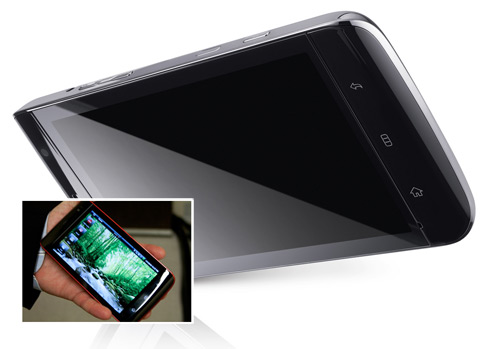
The Streak will also have 3G GSM, Bluetooth 2.1 connectivity, 802.11 b/g Wi-Fi. The Streak may also be come in nine different colors including black, silver, red, purple, blue green, pink and two multicolored designs called Kaleidescope and Sea Sky.
Dell is anticipated to launch the Streak this summer, likely running Android 1.6 with a September upgrade to Android 2.1.
Size: 6.02 x 3.85 inches approximately
Weight: .48 pounds
Price: $500 to $599
Pros: Small size, docking port, Android operating system
cons: 4GB Hard Drive, poor resolution compared to the Slate or IPad
3. Archos 9
The newest tablet from Archos, which uses Windows 7 as an operating system, has an 8.9 inch touch screen capable of 1080p HD resolution and a 60GB hard drive. The Archos 9 boasts a number of multimedia functions, including streaming music over the internet, internet radio accessibility and options for web and video chatting.
Archos is well known for its portable media players, such as the Android-powered Archos 5 Internet tablet.
The Archos has a 1.1GHz Intel Atom Z510 CPU, 1GB RAM, 400MHz DDR2, 60GB HD, Intel GMA 500 graphics card, 1.3 megapixel webcam, Ethernet port, PCI-E interface, 1 antenna, supports 802.11b/g and a USB 2.0 port making it compatible with most 3G broadband cards. Though we've squeezed decent performance from the N270/N280 Atoms, as well as from the newer N450 version, any product we've tested with the slower Z-series Atom CPU has been slow.

The Archos 9 comes with a 5 Hour removable lithium battery pack. At $549, it's more expensive than the entry-level Apple iPad, but does many things that the Ipad can't, from running Firefox to playing streaming video. The Archos 9 struggles with many basic tasks. If the device offered a better touch screen and a faster processor, it could compete with some of the others in this roundup.
Size: 10.1 x 5.3 inches
Weight: 1.8 pounds
Price: $539 to $599
Pros: Experienced tablet maker, 60 GB hard drive, removable battery
Cons: Slow processer and touchscreen UI
4. Asus T91
Asus is the company responsible for kicking off the entire netbook craze with its EEEpc series. They were also showing off a prototype of a 9-inch tablet at CES this year.
The device has four control buttons reminiscent of the favored layout for an Android-powered phone, leading to the logical speculation that the Asus tablet might well run Google’s mobile operating system.
The T91 looks and feels small and light, even for a Netbook. That's because it's built around a 9-inch screen, rather then the bigger 10-inch displays found in most current Netbooks.
The obvious compromises, besides the smaller display, are the tiny keyboard and touch pad, but the tradeoff is a system that's very svelte and easy to carry. It's smaller even than the original 7-inch Eee PC.

The unit has a Intel's 1.33GHz Atom Z520 Processor and a small 16GD SSD hard drive (plus an additional included 16GB SD card, for 32GB total), 1GB RAM an Intel GMA 500 Graphics card and Windows 7, Wifi b/g/n, Bluetooth, 1 Ethernet and 2 - USB 2.0 ports.
The T91 launched in July 2009 and originally launched with Windows XP but now ships with Windows 7 Home Premium. It also offers a unique 20GB of online storage.
Size: 8.9 inches X 6.5 inches deep X 1.1 inches
Weight: 2.1 pounds
Price: $ 429 to 549
Pros: Its a Full Windows 7 laptop, responsive touchscreen
Cons: Slow processor, lack of storage space.
5. Opentablet 7
OpenTablet is an exciting multipurpose device with all the benefits and flexibility of a wirelessly connected personal computing and entertainment device. The Opentablet is being marketed as an Ipad alternative to launch in 4Q 2010.
The OpenTablet 7 is based on Intel’s Atom Moorestown 1.9MHZ next generation processor, runs a closed Nokia/Intel MeeGo operating system (most likely to change).
 The unit will offer a 7 inch LED backlit TFT LCD display, Multi touch, 3G GSM, 802.11b/g/n Wi-Fi, HDMI and USB connectivity, 5 megapixel camera and a microSD slot.
Size: 9.5 inches X 5 inches deep X .59 inches
Weight: 1.15 pounds
Price: TBD
Pros: Its a Full Windows 7 laptop, responsive touchscreen
Cons: Closed operating system, limited details.
6. Compal Tablet
The Compal features a next generation Nvidia processor that was recently presented at the 2010 CES. The Nvidia Tegra processor has dual core ARM Cortex A9 CPUs which work at a 1GHz clock speed and have 8 different processors.
The Tegra processor can handle 1080p HD video, encoding and decoding videos. The processor also supports Adobe Flash 10.1 and the standard Open GL ES 2.0 specs. You can watch HD videos and movies on YouTube and similar websites without a problem.
The Compal tablet will feature a choice of either a 7 inch screen with 800×480 pixels or a 10.1 inch screen with 1024×600 pixels. It will most likely include 512MB DDR2 RAM, 4 GB NAND flash memory, Bluetooth, Wi-Fi, 3G and GPS as an optional feature.

Compal’s Tablet will feature 1.0 Watt Stereo speakers and a 3MP camera. Other features include the Android Operating system, HDMI out, an accelerometer, an ambient Light Sensor, and a Micro SD slot.
The Compal is efficient enough to provide roughly 140 hours of MP3 playback and up to 16 hours of HD video on one battery charge. This of course is untested.
The Compal tablet won’t be directly retailed to consumers, and is “being currently evaluated by a number of potential carriers”. Don’t be surprised if it is sold by a wireless carrier near you.
The device was shown running Android 2.1, and Compal has recently announced that Toshiba has partnered with an estimated delivery date of 3Q 2010.
Size: 8.75 inches X 5 inches deep X .65 inches
Weight: 1.85 pounds
Price: TBD
Pros: Small size, fast Processor, Android Operating system
Cons: Will be carrier based and require a data plan
7. Fusion Garage's JooJoo
As a simple Web tablet, the former JooJoo may be the most feature-barren of all the iPad competitors, but it's also the closest to actually shipping. The JooJoo priced at is in the same price range as the Apple iPad.
The Joo Joo has a 1366 x 768, capacitive 12 inch display, 1.6GHz Intel Atom N270 processor, 1GB of RAM and 4GB solid state drive, WiFi, 1 USB 2.0, headphone and microphone jack.
The Joo Joo has full screen Flash video playback support courtesy the Atom processor coupled up with NVIDIA Ion graphics.

The 2.4 pound device supports 1080p video streaming, with a Linux browser based OS with icon based shortcuts to Youtube, Facebook, Google, etc.
It doesn't help that the JooJoo does not support a card slot for 3G. The JooJoo is available now.
Size: 12.8 inches x 7.8 inches X .75 inches
Weight: 2.4 pounds
Price: $499
Pros: Small size, fast Processor, fast touch screen
Cons: No 3G support, User Interface not easy to use
Tuesday, April 13, 2010
Is Google ready for the Enterprise?
On April 12th 2010, Google invited 400 CIO's for its cloud computing forum called Google Atmosphere. The Google team assembled some of the most well respected IT leaders for an overview of Google's vision for cloud computing. Google executives presented the Google vision along with industry heavyweights, including Morgan Stanley's Mary Meeker, Salesforce.com CEO Marc Benioff, Seagate CIO Mark Brewer and Amazon CTO Werner Vogels.
Cloud computing is the most important technology impacting IT in the next few years. The cloud basically replaces tradiitional server based technology and moves to web based computing, whereby shared resources, software and information are provided to computers and other devices on-demand. Typical cloud computing providers deliver common business applications online which are accessed from another web service or software like a web browser, while the software and data are stored on servers in an off site data center.
2009 Google Atmosphere Opening Video
CIO for the city of Los Angeles, Randi Levin, said "The public battle to switch the city to Google Apps saved at least $5 million in cash up front, and the actual return will be much greater since LA now has disaster recovery services that would have been much more expensive to create on their own".
Google is shooting for "the 80 percent solution," said Google CEO Eric Schmidt. "Our applications are not full replacements for the incumbents. Our strategy is to get to 80 percent, we think we can provide some real value."
Google Docs is not exactly perfect, some attendees admitted. Excel junkies in the finance department openly revolted at the thought of moving to Google Spreadsheet at two of the early adopters at the Atmosphere event, but that's a small segment of a larger population within their companies that only needs the basics.
Google did announce that it had improved the underlying software beneath the Google Docs suite, making the existing products faster and better capable of preserving document fidelity from offline versions.
Google Docs Blog
So the question at hand, Is Google ready for the Enterprise?
We can see that Google is assembling a number of solutions that are 80% there and can be made Enterprise ready. Just think; Google Apps, Google Voice, Google Chrome, Google Maps, Google Earth, Google Android. This is just the beginning. It has the likes of Microsoft wondering how it should compete. They are launching a beta of Microsoft 2010 that looks promising but may be too little too late. Google is throwing the full weight of its engineering, talent and resources behind this shift to the Enterprise. Our vote is ..
Yes, Google is coming to a business near you.
Cloud computing is the most important technology impacting IT in the next few years. The cloud basically replaces tradiitional server based technology and moves to web based computing, whereby shared resources, software and information are provided to computers and other devices on-demand. Typical cloud computing providers deliver common business applications online which are accessed from another web service or software like a web browser, while the software and data are stored on servers in an off site data center.
2009 Google Atmosphere Opening Video
CIO for the city of Los Angeles, Randi Levin, said "The public battle to switch the city to Google Apps saved at least $5 million in cash up front, and the actual return will be much greater since LA now has disaster recovery services that would have been much more expensive to create on their own".
Google is shooting for "the 80 percent solution," said Google CEO Eric Schmidt. "Our applications are not full replacements for the incumbents. Our strategy is to get to 80 percent, we think we can provide some real value."
Google Docs is not exactly perfect, some attendees admitted. Excel junkies in the finance department openly revolted at the thought of moving to Google Spreadsheet at two of the early adopters at the Atmosphere event, but that's a small segment of a larger population within their companies that only needs the basics.
Google did announce that it had improved the underlying software beneath the Google Docs suite, making the existing products faster and better capable of preserving document fidelity from offline versions.
Google Docs Blog
So the question at hand, Is Google ready for the Enterprise?
We can see that Google is assembling a number of solutions that are 80% there and can be made Enterprise ready. Just think; Google Apps, Google Voice, Google Chrome, Google Maps, Google Earth, Google Android. This is just the beginning. It has the likes of Microsoft wondering how it should compete. They are launching a beta of Microsoft 2010 that looks promising but may be too little too late. Google is throwing the full weight of its engineering, talent and resources behind this shift to the Enterprise. Our vote is ..
Yes, Google is coming to a business near you.
Friday, March 5, 2010
Wireless Voip is growth engine in 2010

Google Voice, Skype, Vonage, the list is growing with VOIP providers and 2010 may be the year where it hits the masses and the mobile operators start to embrace the technology to protect its users from defecting.
The number of consumers using mobile VoIP will approach 288 million by 2013, according to research company In-Stat. Of these users, well over half will get their service from an online mobile VoIP provider, 30% will use it over 3G through a MVNO or wireless operator, and 11% will use a WiMax or an LTE operator. Another research firm, Gartner, has forecasted that in 10 years more than half of mobile voice traffic will be carried end to end using VoIP.
Verizon and Skype recently announced an application co-developed allowing smartphone customers to make and receive unlimited Skype calls and dial out to local and international landlines or wireless numbers using regular Skype calling rates. The calls, however, will traverse Verizon's voice network where they’ll be switched as normal phone calls and passed to the Skype VoIP network. Verizon, however, will still require all Skype users to have a data plan.
T-Mobile has been offering the UMA (unlicensed mobile access) technology which attempts to preserve the characteristics of a traditional GSM call. The company refers refers to it as "GSM over IP." They launched the technology in June 2007, and was meant to give the mobile user a steady connection while at home, UMA requires an 802.11-compatible device to properly connect.
Sprint has been busy working with Google and they announced some details about how they will allow Sprint users to integrate Google Voice into their Sprint service. Sprint has dropped the call forwarding fees associated with third-party voicemail services. Call forwarding on Sprint would cost $0.20 per minute. For example: if a user has their line set to forward to their Google Voice mailbox after a certain number of rings and the caller leaves a 5 minute message, that call would cost the user a buck. No longer, on Sprint. http://www.google.com/voice/sprint
AT&T was the last to the party and recently announced that it will allow its I-Phone customers access to Mobile VOIP solutions. The reason for the delay was most likely the impact to the network and the additional traffic that would clog its pipes.
VoIP has been driven by the likes of cable companies that wanted to disrupt the incumbent phone companies, but now the cable companies see another revenue stream and a potential quad play.
Cablevision COO Tom Rutledge recently disclosed the company is testing a device that uses the WiFi network and will switch to a cellular network outside of the company's footprint. The company offers free WiFi service to its customers in the New York metropolitan area.
"The test is so far proving to be good and consistent with our view of what is possible, and gives us some hope that we will be able to launch additional products using the WiFi network that will look like what some people think of as cellular telephone," he said. Rutledge added that Cablevision has not made any decision as to whether it wants to build its own cellular network or lease capacity, but that the latter would be "a less capital-intensive, higher-return business."
The carriers had to react and open the networks and allow diversity with VOIP, we can now find that consumers and business will have new options for wireless calls in the coming year and in the future. Wireless voice as we know it will no longer matter, it will be who has the best data network and the capacity to allow VOIP to grow.
Tuesday, August 25, 2009
Google Voice and Gizmo5 - The future of voice.

In March 2009, Google released a preview of Google Voice, an application that helps you better manage your voice communications. The Google Voice service is currently invitation only and will be its next big step in Unified Communications for Google.
The Google Voice application improves the way you use your phone. Google Voice offers a host of great features, including a single number to ring your home, work, and mobile phones, a central voicemail inbox that you could access on the web, and the ability to screen calls by listening in live as callers leave a voicemail. You also can get transcripts of your voicemail and archive and search all of the SMS text messages you send and receive. You can also use the service to make low priced international calls and easily access Goog-411 directory assistance.
The full feature description can be found here: https://www.google.com/voice/about
For the past few months, WebCanDo engineers have been testing the Google Voice system and we have been impressed with its functionality and features. We found that a single number and unified voicemail is an excellent way to manage your voice calls. The control panel is easy to navigate, the system settings and initial setup are simple. You can add multiple phones, we have tested up to 6 phones that can be integrated. You can add your mobile phone, work, home, and an IP phone. We have also tested the free IP phone client from Gizmo5.
The Gizmo5 phone service is a proprietary SIP freeware soft phone. Unlike Skype, the Gizmo5 network uses open standards for call management, Session Initiation Protocol and XMPP. Gizmo5 uses several proprietary codecs, and like Skype, the Gizmo5 client is closed source software. A Gizmo5 Call in number is sold for $ 35 per year, which is all that is needed. We found a free workaround by dialing ** on your Gizmo5 softphone. You are assigned a 747 number. Since Gizmo5 is based on SIP, it can interoperate with other SIP-based networks. That is where Google Voice comes in.
For inbound calls, the Google Voice service allows you to add the Gizmo5 IP call in number and add it as a device. If someone dials our Google Voice number it places inbound calls to our Gizmo IP phone and all other devices loaded in our Google Voice account. You can set your devices to ring on set schedules like weekdays or weekends only.
For outbound calls, the Google Voice service allows you to determine which device you would like to initiate the call, you can select any device to make the call, it can be your mobile, work, home, or your IP service. The Google Voice service will make the call and bridge the call to the selected device for you. Currently, all Google Voice lines offer unlimited local and domestic long distance service for free. The international service is currently an additional cost, but they do give you .10 cents to test the functionality. Combined with Gizmo5 this service can eliminate the need for a local phone line and your Google Voice service can become your primary line. The advent of the newer headsets and speakerphones that work with SIP softphones to make the Google Voice service an effective value play.
AT&T and Apple have recently blocked the Google Voice service on Iphone devices. The two companies definately see Google as a potential threat. AT&T has everything to lose as its local phone business would be greatly impacted with the launch of a full scale rollout of Google Voice. The wireless business would also lose its international calls as rates for Google Voice are inexpensive as compared to AT&T and Verizon. A call from a mobile phone using AT&T and Verizon Wireless is $ 1.49 to Italy to a landline phone and only .02 with Google Voice, a huge savings.
AT&T says it has absolutely nothing to do with Apple's rejection of Google Voice for the iPhone. The rejection and banning of other Google Voice apps has even led to an FCC investigation. Reuters interviewed Jim Cicconi, AT&T senior executive vice president for external and legislative affairs, who said "Let me state unequivocally, AT&T had no role in any decision by Apple to not accept the Google Voice application for inclusion in the Apple App Store," He also added "AT&T was not asked about the matter by Apple at any time, nor did it offer any view one way or the other," Cicconi provided the statement, accompanying a response to a regulatory inquiry into the rejection of Google's voice application by Apple.
Google Voice will definate shape the future of voice, both mobile and landline. The positive press that Google Voice has captured with the beta will all be based on its ability to offer Number Portability. Today you are issued a new phone number when you sign up for Google Voice. But we’ve confirmed that a number of people have ported their existing phone numbers to Google (Google uses Level3 to handle phone numbers and porting). Google is only testing the service for now, but we’ve heard from a source inside Google that they plan to roll out number portability as a general feature later this year.
Once that happens, it will be a matter of time to see how Google Voice and Gizmo5 impacts the future of voice. We bet on Google.
Friday, August 14, 2009
Network Solutions Hacked, Thousands of Merchants and Cardholders at Risk

A data breach at Internet domain administrator and web host Network Solutions has compromised personal and financial data for more than 500,000 credit and debit cardholders. To add more pain to the breach, Network Solutions says it was PCI compliant at the time of the breach.
The breach was discovered in June, was the result of hackers planting rogue code on the company's Web servers used to host mostly small online stores, intercepting financial transactions between the sites and their customers. No further explanation of how the rogue code made its way onto the company's servers was available from Network Solutions. Network Solutions communications representative has no comment due to of the ongoing law enforcement investigation. Compromised data was captured between March - June in 2009, when the breach was discovered.
The last PCI assessment and certification of Network Solutions' networks was completed on October 31, 2008, as per Network Solutions spokesperson Susan Wade. The firm that performed the assessment was the Payment Software Company, a San Jose, CA-based qualified security assessor company.
The 4,000+ ecommerce merchant customers were notified of the breach on Friday, July 24, via an email and a letter sent via US postal service. Network Solutions provides service to more than 10,000 merchant websites. The ecommerce customers are mainly small businesses, mostly "Mom and Pop" type retailers spread geographically across the country. Wade says that Network Solutions has offered them help in contacting their affected customers. Of the compromised data, no fraud has been reported thus far by the four major credit card brands.
Network Solutions has hired TransUnion, a credit reporting agency, to work with it on behalf of its merchants, to contact their customers whose data may have been affected.
Affected merchants can visit www.careandprotect.com, the website Network Solutions set up for them to get more information.
PCI Security Council Weighs In
Just because a company has passed its compliance validation, it doesn't mean that the need for vigilance of security measures should stop, says PCI Security Standards Council General Manager Bob Russo. As for whether Network Solutions was PCI-compliant at the time of the breach, Russo notes, "Until a forensics investigation is completed, an organization can not comment accurately on its compliance status."
The announcement a data breach at Network Solutions underscores the necessity for ongoing vigilance of an organization's security measures, he adds. "Security doesn't stop with PCI compliance validation. As the Council has said many times, it is not enough to validate compliance annually and not adopt security into an organization's ongoing business practices," Russo states. A card data environment is under constant threat, so businesses must ensure their safeguards are also under constant vigilance - "monitoring and where necessary, ongoing improvement. A layered approach to security is absolutely necessary to protect sensitive payment card data - without ongoing vigilance or a comprehensive security strategy, organizations may be just a change control away from noncompliance," he says.
Validation to the principles and practices mandated in the PCI DSS plays an integral part in an organization's security posture, but basic monitoring and logging cannot be set aside after a security assessment is complete, Russo stresses. "Reports by forensics companies suggest that this is an area of weakness among organizations," he says. "An intrusion need not result in card data compromise if an organization is following the 12 guiding requirements of the PCI Data Security Standard."
WebCanDo offers a PCI compliance review service that will ensure your cardholder data and your merchant services are protected.
Sprint Wireless Broadband: Ranked #1 in reliability by EVERY major third party comparison in the past year.

By Denny Nunez - (Sprint Nextel)
More and more of our clients are looking to migrate their mission critical wired data connections to Fixed-wireless solutions. The main drivers for this are flexibility, decreased time to market, and potential cost saving versus low speed landline alternatives such as frame relay circuits. One of the key selection criteria in choosing a wireless data provider is connection reliability. Wireless Data Coverage does not do much good if it is not consistent and reliable.
Verizon claims that they have the most reliable wireless broadband network. Sprint claims we have the most dependable wireless broadband network. “Sounds like we are saying the same thing”. Who is truly the most dependable or reliable?
The most unbiased way to find out is to look at trusted 3rd party tests based on sound scientific sampling methodologies.
Imagine if McDonalds started to advertise that they make the best hamburgers in America. Imagine they say this claim is based on McDonalds hiring their own Market Surveyors (who receive a W-2 directly from McDonalds) and come to the conclusion after trying the hamburgers from Burger King, Wendy’s and others, that their employer, McDonalds makes the best hamburgers! (Surprise!)
Far fetched? No brand name company would ever do something so obviously biased and expect the public to believe it?
Verizon’s Most Reliable Claim
Let’s take a closer look at the testing methodology that is behind Verizon’s claim of having the most reliable network. See This Verizon press release which reveals what is behind their most reliable network claim:
http://news.vzw.com/news/2009/01/pr2009-01-27j.html
“Verizon Wireless’ team of real-life test men and test women drove more than 1 million miles in 2008 – the equivalent of two roundtrips to the moon or 40 trips around the world – to test the company’s and competitors’ networks. Data collected by these test men and women, who inspired Verizon Wireless’ iconic national advertising campaign, helped the company direct its multi-billion dollar network capital expenditure program and is the basis for the company’s “most reliable network” claim.”
Huh? So Verizon employed drivers in Verizon owned test vans with Verizon owned test gear decided that Verizon has the most reliable wireless data network!
Luckily, in the past year at least 6 independent reports have been released comparing the major wireless data carriers. They are all from trusted 3rd party sources such as Gizmodo, PC World, DSL Reports, Mobile Broadband Reviews, and the company behind our most Dependable Data Network Claim – Nielsen Mobile. 100% of these trusted 3rd party reports come to the same conclusions: Sprint has the most reliable data network!
1) Gizmodo
Coast to Coast 3G Data Test
http://gizmodo.com/5111989/the-definitive-coast+to+coast-3g-data-test
“Sprint is a serious contender in almost any location—and should be taken seriously as a 3G and 4G data service provider”
2) PC World: A Day in the Life of 3G
http://www.pcworld.com/article/167391/a_day_in_the_life_of_3g.html
“Sprint's results lent credence to its 'most dependable' claim…The Sprint network performed especially well, both in speed and in reliability, in our test cities”
3) DataOutages.com:
Sprint - Fewest data service outages of any major wireless provider
http://dataoutages.com/
4) DSLReports.com
Wireless Broadband Review
http://www.dslreports.com/gbu
Sprint Ranked #1 in Reliability among major wireless data providers
5) Novarum
Performance of Cellular Data Networks
http://www.novarum.com/novarum_blog/2008/12/performance-of-cellular-data-networks.html
“Sprint offered the highest performance with the greatest availability… For both ATT and Verizon, in about 25% of the locations with service - we could not get 3G service but rather fell
back to 2G service”
6) MobileBroadband-Reviews.com
2009 Wireless Broadband Comparison
http://www.mobile-broadband-reviews.com/wireless-broadband-reviews.html
Sprint Wireless Data Ranked #1 For Coverage and Reliability.
“ The following is not an overstatement. Sprint mobile broadband is one of the best 3G services you'll find out on the market right now. If you're a Wireless Broadband Exposed reader, you already know that they have the largest and best mobile broadband coverage. In addition to that, their average mobile broadband speed is better than Verizon and AT&T in a number of cities.”
EVERY single independent study I have seen that objectively looks at wireless data services comes to the same conclusion: Sprint has the best wireless data network and the most reliable wireless data network in the country.
We can proudly tell our customers: If reliability matters, choose the wireless data network found to be the most reliable by every major third party report. Choose Sprint Wireless Broadband.
Friday, May 22, 2009
More wireless commercials to be fair.
We received a number of submissions of funny commercials from people touting their wireless carriers, so to be fair we added these commercials for AT&T and Verizon, T-Mobile and Sprint. So the wireless funny commercial competitition begins. Select your favorite.
Thursday, May 21, 2009
Does it pay to buy a Netbook?
 A netbook is a small portable laptop computer designed for wireless communication and access to the Internet. The netbook is designed for limited uses such as web browsing and e-mailing, netbooks rely heavily on the Internet and wifi for remote access to applications and are targeted increasingly at users who require a less powerful computer, most netbooks are priced in the $300 to $600 range at full retail.
In recent months, major wireless carriers are facing a slow down in wireless growth and are now subsizing inexpensive netbooks for for future growth. AT&T and Verizon Wireless are selling HP netbooks for as low as $199 with a two year wireless data contract at $40 per month or $59.99 per month. AT&T subscribers who sign up for a two year service agreement can purchase an Acer netbook for as little as $50, but they must agree to a $60 a month for 5 gigabytes of wireless service.
The carriers want to sell the netbooks the same way AT&T sells Apple's iPhone, by subsidizing the device and re-cooping the costs with contracts for wireless data plans. Business Week reported that AT&T announced that by midsummer it would broaden its own netbook experiment to all its stores nationwide, offering Dell, Acer, or Lenovo products. Using a subsized netbook and wireless plan averages $ 1,500 over the course of a two year agreement.
Verizon is selling the HP Mini 1151NR netbook equipped with the 1.6GHz Intel Atom N270, 1GB of RAM, an 80GB HDD, two USB 2.0 ports, 802.11b/g, SD slot, 10.1 inch screen and Windows XP and of course a 3G EVDO card. You should note that all netbooks miss a DVD drive and have limited storage, so for heavy users they miss the mark.
The average low end laptop typically costs between $ 350 and $ 499. We recently found a full featured Compaq Presario laptop CQ60Z on the HP.com website on sale for $ 399, the laptop came with 2.1GHz AMD Sempron SI-42, 1GB of RAM, 160 GB of HDD, 15.6 inch HD Display, 801.11/b/g, three USB 2.0 ports, HDMI port, LAN port, external monitor port, SD/MS/PRO/MMC/XD slot, and Windows Vista Home Basic SP1 (32-bit).

The return on investment for a netbook would be based on how you plan on using the device. A road warrior who travels may consider a netbook, but can easily miss the features of a notebook. A light user who does not want to carry a large laptop would be the best candidate for a netbook. It is a matter of choice, yes. Is it practical, no.
With wifi now available at most hotels, airports, and shops it has become easier to connect to the web and Internet. Many broadband carriers, like Cablevision and Verizon will be offering wifi in thier coverage areas See More The expense for a carrier subsidized netbook becomes less of a value play and more of the cool device to have and an expensive proposition. Our opinion is stick with a laptop or notebook.
Friday, May 15, 2009
New Sprint commercial featuring Palm Pre
I know everyone is asking, when is the launch date of the Palm Pre? I can only say its coming any day now. Someone just sent me a link to a funny Sprint commercial featuring a Palm Pre at the end of the commercial, so I would be safe to bet my money the smartphone is coming sooner than later.
Sprint is betting big money on the Palm Pre to take subscribers away from the AT&T and the iphone. The web has some significant positive press and reports, and based on what I see on the Palm website, this phone could potentially make a big impact.
We can only wait and see what happens with the launch of the Pre, but based on the Sprint stock's performance this quarter from a measly $ 2.50 a share on Feb 12th to $ 5.33 on May 12th, a 213% rise that most people are betting that this smartdevice could actually do the trick and kick off a comeback.
Take a look at the video, dust off your sleeping bag and prepare to wait on the line in front of the Sprint store.
Sprint is betting big money on the Palm Pre to take subscribers away from the AT&T and the iphone. The web has some significant positive press and reports, and based on what I see on the Palm website, this phone could potentially make a big impact.
We can only wait and see what happens with the launch of the Pre, but based on the Sprint stock's performance this quarter from a measly $ 2.50 a share on Feb 12th to $ 5.33 on May 12th, a 213% rise that most people are betting that this smartdevice could actually do the trick and kick off a comeback.
Take a look at the video, dust off your sleeping bag and prepare to wait on the line in front of the Sprint store.
Wednesday, May 13, 2009
Can the iPhone hurt AT&T?
The success of the iPhone has helped AT&T move to the top of the list for wireless carriers by selling millions of Apple's cool iPhone smartphone devices. The new revenue has added billions of dollars to AT&T's revenue and has helped the carrier rack millions in profit. 
Can there be trouble selling so many I-Phones? The Wall Street Journal has recently reported that the I-Phone is putting a strain on the AT&T Wireless network. The iPhone itself is the most expensive device for AT&T, due to the rich revenue sharing contract with Apple. Add in the equipment subsidies on the initial purchase price and the tack on the cost to operate the data network for such a bandwidth intensive smartdevice, this all adds up to a questionable ROI for AT&T.
IPhone users download games, videos and other internet content at three to four times the rate of other PDA users, according to independent studies. A popular game Myst, uses 727 megabytes of data to download. Currently, AT&T charges IPhone subscribers the same data rate of $30 per month for mobile web access as all other customers, aside from restricting activities, like file sharing, AT&T does not restrict how much data can be downloaded using an iPhone, making the iphone a costly device to operate on its network.
As the number of I-Phone customers grows combined with the resulting growth in internet mobile web downloads (over 1 billion as of April 2009) will begin to cause extensive strain on AT&T's core data network. AT&T will have to expand its network and add capacity to support the data consumption of its iPhone users.

In the race to compete for subscribers, the question "is this subscriber profitable" has now been lost in the shuffle. How does AT&T re-coop investments made to support these customers? AT&T will be further pressured to compete with Verizon and Sprint as they all make large capital investments for 4G technologies and attempt to increase capacity tenfold. Who pays for this capacity? The current data pricing structure will have to increase in the near term to support its growth in data.
AT&T currently offers unlimited data plans to customers because most wireless users prefer a fixed cost model and many users would reconsider purchasing a phone in which they have to monitor their usage to avoid hefty charges. A price increase on unlimited data plans might also cause strain on churn, as there is heavy competition these days and smaller competitors like Sprint that have the Palm Pre as an alternative to the iphone and that can lure customers away.
Apple and AT&T are rumored to be nearing a contract expiration date and AT&T is reportably expected to reduce the cost of its contract by $10 each month to hang on to the exclusive agreement with Apple, so more bad news for AT&T. From this perspective, AT&T may have bitten off more than it could chew and only time will tell if the iphone helped or hurt AT&T.

Can there be trouble selling so many I-Phones? The Wall Street Journal has recently reported that the I-Phone is putting a strain on the AT&T Wireless network. The iPhone itself is the most expensive device for AT&T, due to the rich revenue sharing contract with Apple. Add in the equipment subsidies on the initial purchase price and the tack on the cost to operate the data network for such a bandwidth intensive smartdevice, this all adds up to a questionable ROI for AT&T.
IPhone users download games, videos and other internet content at three to four times the rate of other PDA users, according to independent studies. A popular game Myst, uses 727 megabytes of data to download. Currently, AT&T charges IPhone subscribers the same data rate of $30 per month for mobile web access as all other customers, aside from restricting activities, like file sharing, AT&T does not restrict how much data can be downloaded using an iPhone, making the iphone a costly device to operate on its network.
As the number of I-Phone customers grows combined with the resulting growth in internet mobile web downloads (over 1 billion as of April 2009) will begin to cause extensive strain on AT&T's core data network. AT&T will have to expand its network and add capacity to support the data consumption of its iPhone users.

In the race to compete for subscribers, the question "is this subscriber profitable" has now been lost in the shuffle. How does AT&T re-coop investments made to support these customers? AT&T will be further pressured to compete with Verizon and Sprint as they all make large capital investments for 4G technologies and attempt to increase capacity tenfold. Who pays for this capacity? The current data pricing structure will have to increase in the near term to support its growth in data.
AT&T currently offers unlimited data plans to customers because most wireless users prefer a fixed cost model and many users would reconsider purchasing a phone in which they have to monitor their usage to avoid hefty charges. A price increase on unlimited data plans might also cause strain on churn, as there is heavy competition these days and smaller competitors like Sprint that have the Palm Pre as an alternative to the iphone and that can lure customers away.
Apple and AT&T are rumored to be nearing a contract expiration date and AT&T is reportably expected to reduce the cost of its contract by $10 each month to hang on to the exclusive agreement with Apple, so more bad news for AT&T. From this perspective, AT&T may have bitten off more than it could chew and only time will tell if the iphone helped or hurt AT&T.
Thursday, May 7, 2009
Verizon to launch WiFi Hot Spot Router and Free WiFi Service

Verizon Wireless is ready to launch a Wi-Fi enabled hot spot device called the MiFi 2200 Intelligent Mobile Hotspot. The carrier, which used to advertise the benefits of its mobile data network over Wi-Fi, plans to start selling a Wi-Fi-enabled device that lets customers share Internet connectivity.
The device lets customers share Internet connectivity as long as one person is hooked up to the Verizon 3G network. The device acts as a personal Wi-Fi cloud, accommodating up to five Wi-Fi-enabled devices, including notebooks, netbooks, cameras, gaming devices or portable media/MP3 players. The device is small enough to fit in a pocket, and it weighs just over 2 ounces, according to a Verizon spokeswoman. It includes integrated internal CDMA and Wi-Fi antennas, security and authentication. When one device is connected through Wi-Fi, the MiFi 2200’s rechargeable battery provides up to four hours of active use and 40 hours of standby time on a single charge.
The MiFi 2200 will go on sale on May 17 for $99.99 after a $50 rebate and new two-year agreement. Price plans range from $40 a month to $60 a month. Customers also can get a day pass for $15 when the device is purchased at full retail price without a monthly service plan.
Verizon Communications Inc. is also planning to offer free Wi-Fi access at hotspots to subscribers to its home broadband services, according to informed sources. The company is in talks with Boingo, a startup that counts former EarthLink founder Sky Dayton as chairman, to deliver the access. Discussions are in the early stages, and Verizon is uncertain about particulars like whether users would have free access only in their regions or nationwide. The service may launch as soon as the summer, according to reports.
The move comes as more users are turning to mobile devices like cell phones and laptops to connect to the Internet. Some Verizon rivals, meanwhile, already provide subscribers to their home broadband services free access at wifi hot spots. AT&T Inc., the country’s second largest cell phone company, offers broadband subscribers free wifi access at hotspots. Cable operator Cablevision Systems Corp. rolled out a wifi network available for free to broadband subscribers in its Long Island, NY footprint last year.
Boingo’s network of Wi-Fi hotspots – which includes more than 100,000 locations around the world – will be available to both Verizon FiOS and DSL broadband subscribers. Boingo charges users $9.95 a month for access at North American hotspots, such as airports, cafes and restaurants. Verizon would likely offer Boingo service to its DSL and FiOS subscribers. Verizon and Boingo would not comment on the potential partnership.
Friday, April 17, 2009
Google Chrome browser Can it beat IE and Firefox?
We have been testing the new Google Chrome browser and so far the application has its positives and negatives.
Google now directly competes against Microsoft and Firefox and with the release of its new web browser, Chrome. The browser is a small and fast applications that is not full featured as IE or Firefox, but it makes up for it with its speed. Chrome has received a tremendous amount of press and reviewes and lives up to the hype by creating a whole new idea in web browsing using clever and convenient changes that make browsing the web faster than Microsoft's Internet Explorer 8 or Mozilla's Firefox 3.
The software is only available for download for Windows Vista and XP, but Google plans to expand Chrome to Mac and Linux platforms as well. The installation of the Chrome browser is easy and fast and Chrome automatically detects the current web browser you use and prompts you through the process of installation. When you first run the application, Chrome imports your bookmarks, passwords, and settings from Firefox or Internet Explorer. It even can grab username and password data, and it automatically populates those fields for you when you use Chrome for the first time to visit any sites, so startup is a snap.
After running through the installation, Chrome opens and immediately you begin to experience the internet in a new way. Chrome's layout is very simple. You will see a row of tabs that runs along the top, a web address bar, and a bookmarks bar that runs beneath the address bar. A separate recent bookmarks box appears at the right of the screen. No Google Toolbar which is a big miss.
Like all Google products, Chrome has a remarkably minimalist client. There is no full-scale menu bar and no title bar and few distractions. All controls are buried beneath two icons to the right of the address bar. A page icon for managing tabs and using Google Gears to create application like shortcuts from your desktop to a Web site; and a wrench for history, downloads, and other browser options.
You can set your own home page, or you can use the most visited sites page as your starting point. This page provides thumbnail images of your most frequently visited sites, shows recent bookmarks, and supplies a search field for searching your page history. You can change your default search engine. This option is located beneath the wrench icon, under Options . Chrome's design bridges the gap between desktop and the new term "cloud computing." At the touch of a button, Chrome lets you make a desktop, Start menu, or QuickLaunch shortcut to any web page or Web application, blurring the line between what's online and what's inside your PC.
For example, you can create a desktop shortcut for applications like Google Maps. When you create a shortcut for a Web application, Chrome strips all of the toolbars and tabs from the window, leaving you with something that feels much more like a desktop application than like a Web application or page. It needs some work as the lack of forward and back buttons means that if you browse between pages in a saved web application you may find yourself a little confused if you want to go back a page. Chrome does let you right-click to navigate backward, but its an extra step.
Search is an integral part of Chrome; and Google has added some great features to make searching the internet easier. Chrome goes beyond its competition by searching your browser history's page titles as well page content. The history results show the title of the page, as well as a thumbnail representation of the page, but it doesn't show the actual Web page address. The lack of URL information can make it difficult to identify the specific Web page you're going to, especially if the site's title bar description is not specific.
Chrome includes a number of features that appear in other browsers, such as a private browsing mode, tools for web developers to use in viewing and troubleshooting source code, and the ability to restore all tabs from a previous session. Chrome also features tab isolation: If a Web page causes a problem with Chrome and leads to a crash, the crash will affect only the tab displaying the page and not the whole program. Internet Explorer 8 will offer a similar feature, but Chrome takes the idea a step further by adding a task manager that gives the user an idea of how much memory and CPU use a page is eating up, and by allowing you to kill anything that is causing a problem.
Chrome features a bookmarks manager and uses a two-pane layout: The left-hand pane displays folders of bookmarks, and the right-hand pane shows the contents of bookmark folders. A search field is in the upper-right corner of the bookmarks manager window, and results appear as you type.
By default, Chrome will not restore your session; if Chrome crashes, it takes everything with it unless you manually configure the browser to act otherwise. In contrast, Mozilla Firefox and Microsoft Internet Explorer 8 automatically restore your previous session in the event of a failure. Sites visited that run JavaScript and Ajax work fine, but Microsoft's Silverlight does not support Chrome at this time, even though it works with Safari, which uses the same WebKit browser engine as Chrome.
Google has produced an excellent browser that is friendly enough to handle average browsing activities without complicating the tasks, but at the same time is powerful enough to meet the needs of advanced users. I would definately recommend you test drive Chrome and see if it works for you as an alternative, the big bonus is the boost in page load speed.
http://www.google.com/chrome/intl/en/p/google.html
Google now directly competes against Microsoft and Firefox and with the release of its new web browser, Chrome. The browser is a small and fast applications that is not full featured as IE or Firefox, but it makes up for it with its speed. Chrome has received a tremendous amount of press and reviewes and lives up to the hype by creating a whole new idea in web browsing using clever and convenient changes that make browsing the web faster than Microsoft's Internet Explorer 8 or Mozilla's Firefox 3.
The software is only available for download for Windows Vista and XP, but Google plans to expand Chrome to Mac and Linux platforms as well. The installation of the Chrome browser is easy and fast and Chrome automatically detects the current web browser you use and prompts you through the process of installation. When you first run the application, Chrome imports your bookmarks, passwords, and settings from Firefox or Internet Explorer. It even can grab username and password data, and it automatically populates those fields for you when you use Chrome for the first time to visit any sites, so startup is a snap.
After running through the installation, Chrome opens and immediately you begin to experience the internet in a new way. Chrome's layout is very simple. You will see a row of tabs that runs along the top, a web address bar, and a bookmarks bar that runs beneath the address bar. A separate recent bookmarks box appears at the right of the screen. No Google Toolbar which is a big miss.
Like all Google products, Chrome has a remarkably minimalist client. There is no full-scale menu bar and no title bar and few distractions. All controls are buried beneath two icons to the right of the address bar. A page icon for managing tabs and using Google Gears to create application like shortcuts from your desktop to a Web site; and a wrench for history, downloads, and other browser options.
You can set your own home page, or you can use the most visited sites page as your starting point. This page provides thumbnail images of your most frequently visited sites, shows recent bookmarks, and supplies a search field for searching your page history. You can change your default search engine. This option is located beneath the wrench icon, under Options . Chrome's design bridges the gap between desktop and the new term "cloud computing." At the touch of a button, Chrome lets you make a desktop, Start menu, or QuickLaunch shortcut to any web page or Web application, blurring the line between what's online and what's inside your PC.
For example, you can create a desktop shortcut for applications like Google Maps. When you create a shortcut for a Web application, Chrome strips all of the toolbars and tabs from the window, leaving you with something that feels much more like a desktop application than like a Web application or page. It needs some work as the lack of forward and back buttons means that if you browse between pages in a saved web application you may find yourself a little confused if you want to go back a page. Chrome does let you right-click to navigate backward, but its an extra step.
Search is an integral part of Chrome; and Google has added some great features to make searching the internet easier. Chrome goes beyond its competition by searching your browser history's page titles as well page content. The history results show the title of the page, as well as a thumbnail representation of the page, but it doesn't show the actual Web page address. The lack of URL information can make it difficult to identify the specific Web page you're going to, especially if the site's title bar description is not specific.
Chrome includes a number of features that appear in other browsers, such as a private browsing mode, tools for web developers to use in viewing and troubleshooting source code, and the ability to restore all tabs from a previous session. Chrome also features tab isolation: If a Web page causes a problem with Chrome and leads to a crash, the crash will affect only the tab displaying the page and not the whole program. Internet Explorer 8 will offer a similar feature, but Chrome takes the idea a step further by adding a task manager that gives the user an idea of how much memory and CPU use a page is eating up, and by allowing you to kill anything that is causing a problem.
Chrome features a bookmarks manager and uses a two-pane layout: The left-hand pane displays folders of bookmarks, and the right-hand pane shows the contents of bookmark folders. A search field is in the upper-right corner of the bookmarks manager window, and results appear as you type.
By default, Chrome will not restore your session; if Chrome crashes, it takes everything with it unless you manually configure the browser to act otherwise. In contrast, Mozilla Firefox and Microsoft Internet Explorer 8 automatically restore your previous session in the event of a failure. Sites visited that run JavaScript and Ajax work fine, but Microsoft's Silverlight does not support Chrome at this time, even though it works with Safari, which uses the same WebKit browser engine as Chrome.
Google has produced an excellent browser that is friendly enough to handle average browsing activities without complicating the tasks, but at the same time is powerful enough to meet the needs of advanced users. I would definately recommend you test drive Chrome and see if it works for you as an alternative, the big bonus is the boost in page load speed.
http://www.google.com/chrome/intl/en/p/google.html
Monday, April 6, 2009
Samsung to launch Google Android Handsets
Samsung is preparing to introduce several new devices that will use the Google Android code. Samsung confirmed Monday at CTIA that it will roll out its first device based on Google's mobile platform in June. A Samsung spokesperson said that only one handset using Google's Android operating system will hit the market somewhere outside the U.S. and would not "confirm or deny" two possible domestic devices rumored for release later this year. The Samsung spokesperson would not disclose the location of the impending international launch.
In an interview with Forbes magazine, Won Pyo Hong, EVP of product strategy in the company's mobile communication division said "Samsung plans to release several Google Android devices this year" and "Samsung's first Android phone is slated to launch in June outside of the United States".
Android is a software stack for mobile devices that includes an operating system, middleware and key applications. As of today only one device introduced by T-mobile, HTC and Google runs on the Android platform. http://code.google.com/android/
The two other phones will most likely be carried by Sprint and T-Mobile, as they are the only U.S. operators that belong to the Open Handset Alliance. The Open Handset Alliance is a group of 47 technology and mobile companies devoted to commercial deployment of handsets and services using the Google Android platform.
Bloomberg News recently reported that Sprint executives are now considering Android for its product lineup. "We believe in the vision for Android, so we want to see it get bigger and get healthy," said Kevin Packingham, Sprint’s vice president of products and devices. "We can, when the timing’s right, pull the trigger."
Due to operator preferences, the two U.S. Android phones will look "totally different," Hong told Forbes. In contrast, Samsung plans to deliver one Android phone, at least initially, to European consumers. "In Europe, you can launch one common device with several carriers," he noted.
Hong also said, that its carrier partners are content with the timing. "We are launching Android devices later than HTC, but in terms of our commitments with carriers, there is no delay at all."
In an interview with Forbes magazine, Won Pyo Hong, EVP of product strategy in the company's mobile communication division said "Samsung plans to release several Google Android devices this year" and "Samsung's first Android phone is slated to launch in June outside of the United States".
Android is a software stack for mobile devices that includes an operating system, middleware and key applications. As of today only one device introduced by T-mobile, HTC and Google runs on the Android platform. http://code.google.com/android/
The two other phones will most likely be carried by Sprint and T-Mobile, as they are the only U.S. operators that belong to the Open Handset Alliance. The Open Handset Alliance is a group of 47 technology and mobile companies devoted to commercial deployment of handsets and services using the Google Android platform.
Bloomberg News recently reported that Sprint executives are now considering Android for its product lineup. "We believe in the vision for Android, so we want to see it get bigger and get healthy," said Kevin Packingham, Sprint’s vice president of products and devices. "We can, when the timing’s right, pull the trigger."
Due to operator preferences, the two U.S. Android phones will look "totally different," Hong told Forbes. In contrast, Samsung plans to deliver one Android phone, at least initially, to European consumers. "In Europe, you can launch one common device with several carriers," he noted.
Hong also said, that its carrier partners are content with the timing. "We are launching Android devices later than HTC, but in terms of our commitments with carriers, there is no delay at all."
Thursday, April 2, 2009
AT&T Strike Looms this Weekend
 April 2, 2009 - AT&T unions and employees approximately 125,000 workers are poised to walk off the job on Saturday at midnite. AT&T employees are threatening a possible strike for several issues regarding employee wages, retiree benefits and healthcare. A critical issue is the company wants union workers to pay more for healthcare costs.
The workers who may strike are the AT&T call center and service representatives who take your calls about landlines service and wireless phones service would not be affected.
At&T management is preparing for the contingency plans. "We have been planning for the possible strike for some time and we are very prepared," said a company representative.
Communications Workers of America(CWA) workers have recently gone on strike before. It was five years ago, and eventually, they came to an agreement. The latest agreement is set to expire at 11:59 p.m. on Saturday.
A spokesperson with AT&T says it is a competitive market right now and these are tough economic times, but the company is committed to negotiating a contract with good wages and benefits.
Both sides would like to prevent a strike and say a contract extension, while they continue negotiating, is possible.
For more information on the AT&T / CWA Strike visit http://www.cwa-union.org/news/cwa-members-mobilize-for-quality-contracts-at-at-t.html or http://www.att.com/
Subscribe to:
Posts (Atom)

